
Massachusetts Mugshot Public-Record Rule
A booking photo in Massachusetts may qualify as a public record. That label alone settles nothing. The real question is record-specific. It asks which agency holds it, what sits alongside it, and whether an exemption blocks release. The broad definition in G.L. c. 4, § 7, clause Twenty-Six covers records kept by public agencies, but exemptions still apply. A custodian has to weigh each photo. Any separable material counts too. Police files are not all open, and they are not all closed either.
Nor does the law demand a public photo feed. Plenty of departments post text arrest logs online yet keep booking photographs off any roster. You can request a named image and still get a denial. You might receive a redacted copy or word that the agency does not hold it. Whatever the answer, the reasons must tie to the record itself. They must also rest on law that fits it.
So a hunt for Massachusetts busted mugshots may land on a public log with no face, or a booking photo that never made it online. Ask the original custodian first. Keep an arrest record separate from a court outcome. The Legislature's public-record definition and exemptions supply the statutory starting point for that call.
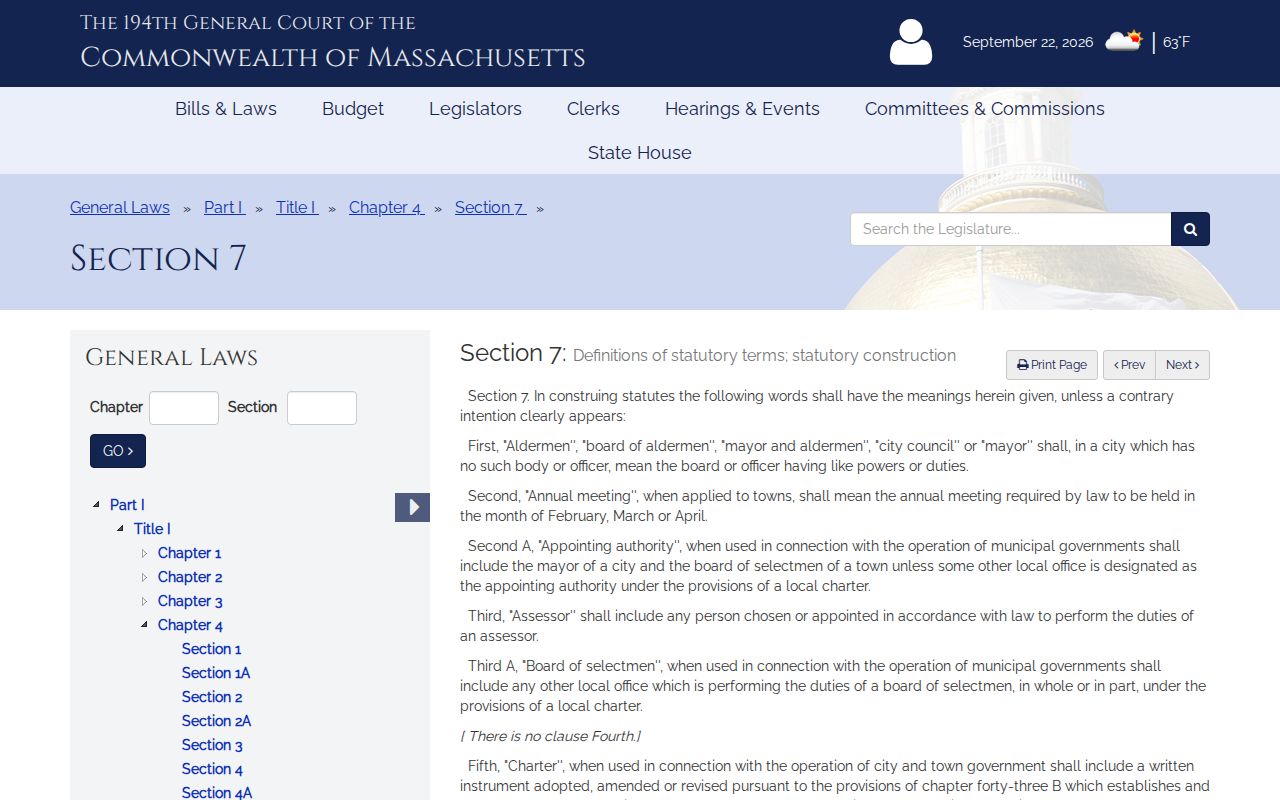
The statute supplies a framework, not an automatic release rule for every booking photograph.
Massachusetts Booking-Photo Law
Massachusetts has no single statute devoted to booking-photo publication. There is no special ban on charging removal fees, and no mugshot-only private removal claim. Do not shorthand this to "no law about mugshots." General exemptions, privacy rules, CORI, juvenile confidentiality, sealing, expungement, and retention rules can all touch a given image.
The state relies on its general public-record framework. The definition in G.L. c. 4, § 7 is broad. Its exemptions, though, cover material shielded by statute or necessary implication, privacy interests, and investigative files when release would hamper law enforcement without serving the public. Which one fits depends on the record. A custodian may hand over a text report while holding back the photo, or redact protected parts and release the rest.
No statewide rule makes an agency publish every booking photo. None guarantees erasure of every online copy, either. A request for access and a request for a correction are different tracks. The first goes to the agency or court with the official file. The second goes to each publisher or archive holding its own copy.
Note: Public-record status turns on the specific record and applicable exemptions, not on a single yes-or-no mugshot rule.
Chapter 66, section 10 explains the response framework for a reasonably described public-record request.
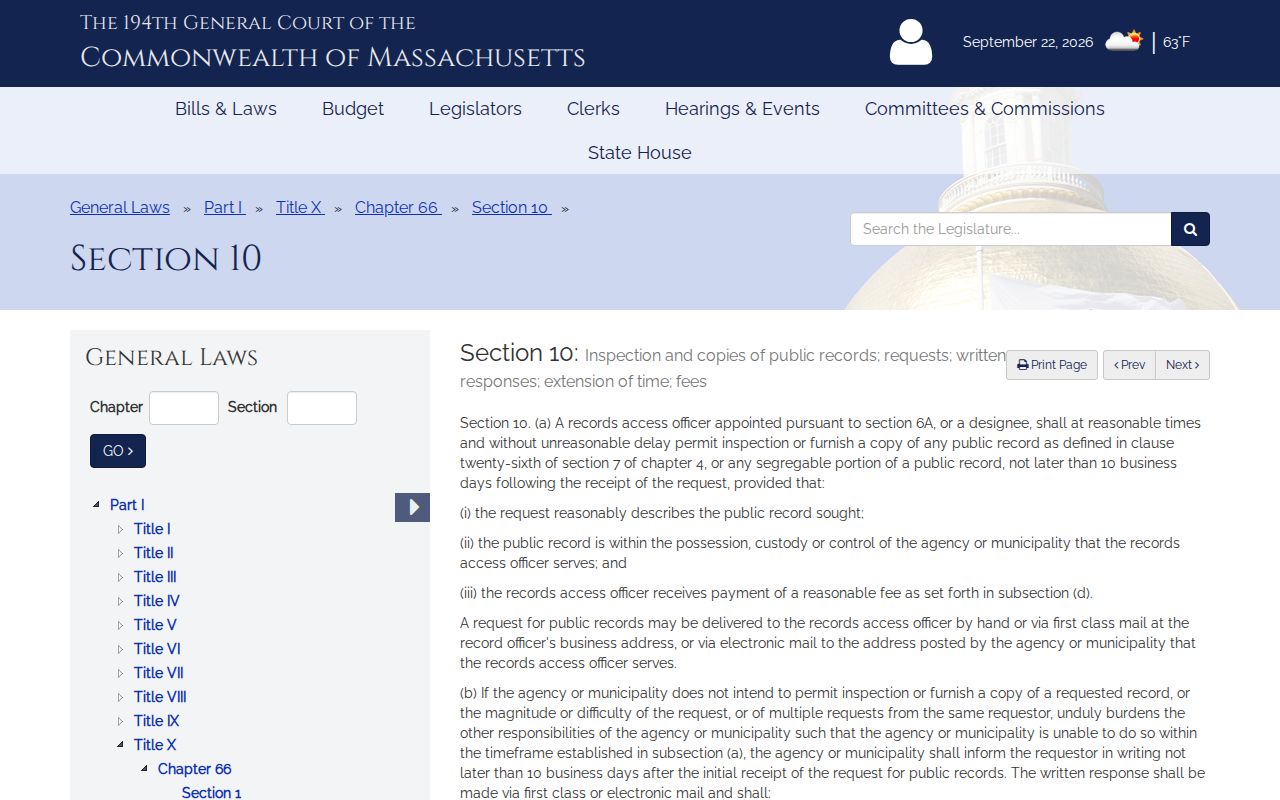
Timing, fees, extensions, and any withholding all turn on the custodian and the specific request.
Massachusetts Booking-Photo Ruling
The leading modern case is Boston Globe Media Partners, LLC v. Department of Criminal Justice Information Services & others, 484 Mass. 279 (2020), docket SJC-12690. The Supreme Judicial Court case summary and published opinion deal with booking photos. They also cover police incident reports sought for public officials.
The Supreme Judicial Court held those items were not CORI by "necessary implication." Exemptions, the court stressed, get a narrow reading. The case involved public officials. On those facts, the privacy interests lost to the public interest. The practical effect: an agency cannot slap a CORI label on every booking photo. It cannot refuse each request outright.
Still, the ruling ordered no statewide publication. It did not hold that every Massachusetts mugshot must come out. The case concerned one request tied to public officials. Juvenile records, sealed cases, and active investigations raise different concerns. So do victim or witness details. Treat the decision as a reason to demand a record-specific explanation. It is not a promise of access. For later docket events tied to a booking, the Massachusetts court-search instructions offer one route.
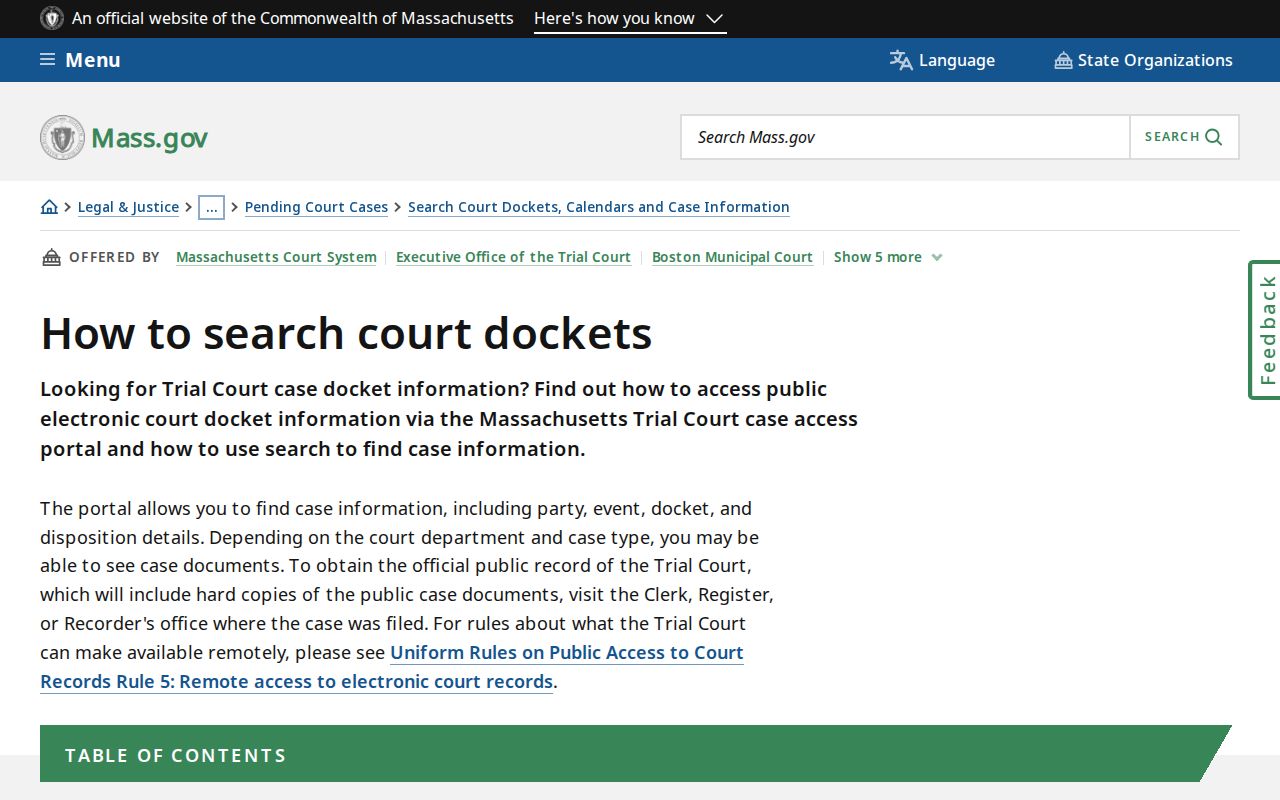
A court docket is a separate record source. It may not offer remote access to every document or image.
CORI and Massachusetts Arrest Records
Massachusetts wraps its criminal-history records under the label CORI. The definition comes from G.L. c. 6, § 167. Access and dissemination rules live in 803 CMR 2.00. A booking photo alone is not automatically CORI. A booking sheet is different. Its identifying or disposition details can pull the sheet into CORI, depending on what the record actually holds. That label still does not make an image public. Public-record exemptions and other protections apply on top of it.
A CORI request is not a photo request. G.L. c. 6, § 172 describes criminal-history information released in specified circumstances, including certain convictions and custody status or placement. It is no blanket right to republish every arrest artifact.
Daily police logs follow a separate rule. G.L. c. 41, § 98F calls for a log of valid complaints and reported crimes. Entries cover date, time, location, the nature of the incident, and the names and addresses of arrested people, subject to statutory exceptions. A log is text about an incident. It is not the booking-photo file. Across Massachusetts, police departments post logs and arrest reports online far more often than booking photos.
Note: A public arrest log can document an allegation without showing the later court result or any booking image.
Massachusetts Mugshot Records Requests
Start by finding the custodian. Describe it well enough to locate. Name the record precisely. G.L. c. 66, § 10 generally makes a records access officer permit inspection or copying of a reasonably described public record, or a segregable part, within ten business days. State and municipal agencies follow different timing and extension rules. When an agency needs more time, its response must cover custody, withheld material and the legal basis, a likely timeframe, any fee estimate, and appeal information.
The Secretary of the Commonwealth maintains request guidance and a submission page to help find the correct office. A narrow request works best. Skip the blanket demands. Ask for an existing image and its booking or release record. Do not ask an agency to build a statewide database it does not keep.
The DOC public-records guidance is a Massachusetts example of an agency-specific request route. It names a response contact.
Another sheriff or police department may post its own steps.
- Name the agency and date range. Add the person's full name or booking number if known, and identify the record as a booking or identification photograph.
- Ask for the related booking sheet, release or transfer record, and current disclosure or retention policy if those are in the same custodian's files.
- Request electronic delivery if available, and ask the records officer to release segregable portions if part of a record is exempt.
- If the response is delayed or denied, read the stated exemption and appeal information. Narrow the request when that would resolve a search or fee issue.
What you pay depends on the agency, the format, search work, segregation work, and any approved extension. Paper copies carry a five-cent-per-page cap. State agencies can charge up to $25 per hour after the first four hours, in specified circumstances. Not every photo request costs money. A custodian must give an estimate before imposing a material charge. Redaction time is not automatically billable.
Note: Response timing and fees can vary with the custodian, the request, and the work needed to locate and prepare the record.
Juvenile and Sealed Massachusetts Mugshot Records
Juvenile court files are not adult public records by default. G.L. c. 119, § 60A makes youthful-offender proceedings public when they proceed under indictment, handled in the manner of adult proceedings. Delinquency records are generally withheld otherwise. A police booking or incident record is not the same as an open juvenile court file. Nor does a third-party photo prove that a young person's record can lawfully be republished. The defaults lean toward privacy.
Massachusetts offers more than one sealing route. The state's sealing overview explains eligibility and waiting periods for adult convictions under G.L. c. 276, § 100A, with special limits for some offenses. Juvenile sealing runs through § 100B. Section 100C handles nonconviction records. The outcome matters here. Not guilty, no bill, and no probable cause are not the same category as a dismissal or nolle prosequi.
For records entered on or after March 11, 2024, official materials describe automatic sealing for specified not-guilty, no-bill, and no-probable-cause outcomes, unless the person opts out within the statutory period. Automatic sealing has limits. Dismissed and nolle prosequi matters take separate court-directed or petition paths. Check the current statute and official instructions for the case. Not every nonconviction is sealed the same way.
Massachusetts Mugshot Expungement
Expungement is not sealing. Sealing limits access. Expungement permanently destroys the official record under the rules that apply. The Massachusetts expungement overview covers the details. Time-based paths carry eligibility limits. The relevant rules sit in G.L. c. 276, §§ 100E–100U. Other routes cover false or unauthorized records and identity theft. They also reach conduct that is no longer criminal and certain errors or fraud on the court. Eligibility turns on the record and the statutory conditions. Offense and case details count.
Official forms sit in the state's criminal court forms library. The current list of §§ 100E–100U sits beside them. Tie any petition or order to the right court record. And one caution applies. A court order does not promise that every independent copy on the internet disappears.
Sealing or expungement changes access to the official court, agency, or CORI file. A newspaper story, a sheriff's booking image, and an archive can each have a different custodian. So can a copied web page. A source may want proof of the official outcome. Search results can also linger after a source page changes. Correcting the source and refreshing a search engine are separate steps.
Note: An expungement order affects the official record under its rules, but it does not automatically erase every separate copy.
Correcting an Old Massachusetts Mugshot
Start by pinning down exactly where the image or text lives today. Official agency page? Write to that agency directly. Include the record details plus any sealing or expungement order you hold. If the official record is accurate and an independent publisher simply copied it, take the matter to that publisher instead. Send the source record and the verified disposition, then request a correction or removal under the site's own policy. Massachusetts law creates no universal online-removal process.
The Massachusetts page maintained by Mugshots.com is an unofficial third-party archive, not an official custody source. Its record-maintenance policy lays out voluntary terms. Removal and updates cost nothing in the stated categories. The policy accepts document-backed requests, including ones citing sealed or expunged records. It covers favorable or other case dispositions as well. Expect an answer within ten business days. None of this is a legal right created by state law. Other publishers' copies stay put.
Many other aggregator sites list no Massachusetts-specific correction procedure at all. A search result that looks local can still come from an out-of-state feed, so read the page before assuming an opt-out exists. News outlets usually post a correction or editorial contact. A correction may add a case result without deleting a historically accurate article.
- Save the source URL and note whether the page belongs to an agency, court, newspaper, archive, or another publisher.
- Get the official docket entry or order that supports the correction. Match the identity, court, docket, and case outcome.
- Send a concise request to the source custodian or publisher and ask for a corrected status, removal, or other action its policy allows.
- After the source page or image is removed or materially changed, use Google's outdated-content guidance for a search-result refresh. A refresh does not remove a source page that remains online.
A free publisher process never guarantees total erasure. Skip any outfit that charges for a legal result the statute simply does not offer. When the law or a record's status is unclear, lean on official court materials. You can also talk with a Massachusetts attorney.
Need current lookup routes instead? The Massachusetts busted mugshots and records page keeps municipal logs, county custody pages, court dockets, and state-prison records separate. That separation matters. The DOC mugshots and offender-search page covers the state-prison system. A state inmate file is not the same thing as a local booking file.