
Old Massachusetts Arrest Records and Photos
No single Massachusetts archive holds every arrest photograph. Each record type has its own custodian. A police log, a house-of-correction file, a state-prison ID record, and a court docket come from four different places. So the first question for a closed record is simple: where was it created? If the agency transferred it, the trail shifts again. The Massachusetts Archives keeps noncurrent state records. That means Department of Correction and Parole Board material, records of the Massachusetts Reformatory for Women at Framingham, and selected county records of lasting value. Its collections guide marks a starting point for record groups, not a name-search shortcut for every arrest.
Older criminal calendars can list names, dates, and case references without any portrait. A case file might hold photographs or ID material. That depends on the file. A docket can show later events and a disposition, while a jail record may show admission or release. These are related records, not copies of each other. For a current county booking, the sheriff or police department stays the likely custodian. Statewide county links sit in the County Directory.
Massachusetts Archive Collections
A finding aid is a catalog of record groups. It describes series and their scope. The Massachusetts Archives finding aids map several paths, each covering different ground. Read the collection description before hunting a photograph, and note any stated gaps or physical limits.
| Collection | Era or record type | How to access |
|---|---|---|
| Massachusetts Archives collections | Noncurrent state records, including DOC and Parole Board material, plus selected county records | Use the collection overview and linked finding aids to identify a record group before asking for a file. |
| Department of Correction record group | State correctional records described in the Health and Human Services finding aid | Check the finding aid for series descriptions and identifiers, then ask the Archives whether a named file survives. |
| Massachusetts Reformatory for Women exhibits | Selected inmate case files from 1918 to 1921 | Browse the Digital Archives exhibits. The selected files are historical case material, not a current jail roster. |
| Suffolk County Jail calendars | Criminal calendars from 1799 to 1988, listed as CY2.13/409X; debtors' calendars as CY2.13/408X | Read the county-records finding aid for the stated gaps and physical descriptions. Calendar entries do not establish that a booking photo is present. |
"Old mugshot" is often too broad a request. The holdings show why. A calendar, a commitment entry, an inmate file, and an ID photograph may sit in separate series. A record can back up a name or date search while offering no face at all.
Suffolk County is a good illustration. Its county-records finding aid lists criminal calendars as CY2.13/409X and debtors' calendars as CY2.13/408X. The criminal calendars run from 1799 to 1988. The aid states its gaps and physical descriptions. Those series numbers frame a request but promise no name-searchable index. Note the identifier and the date range. Then ask the Archives whether that calendar or a related case file is available. An event may fall in a stated gap. Check with the originating court before treating the gap as proof no record survives.
Note: The Suffolk calendar ranges include stated gaps, so check the series description before reading a missing name as a missing record.
The Massachusetts Archives collection page links to finding aids for state and selected county records.
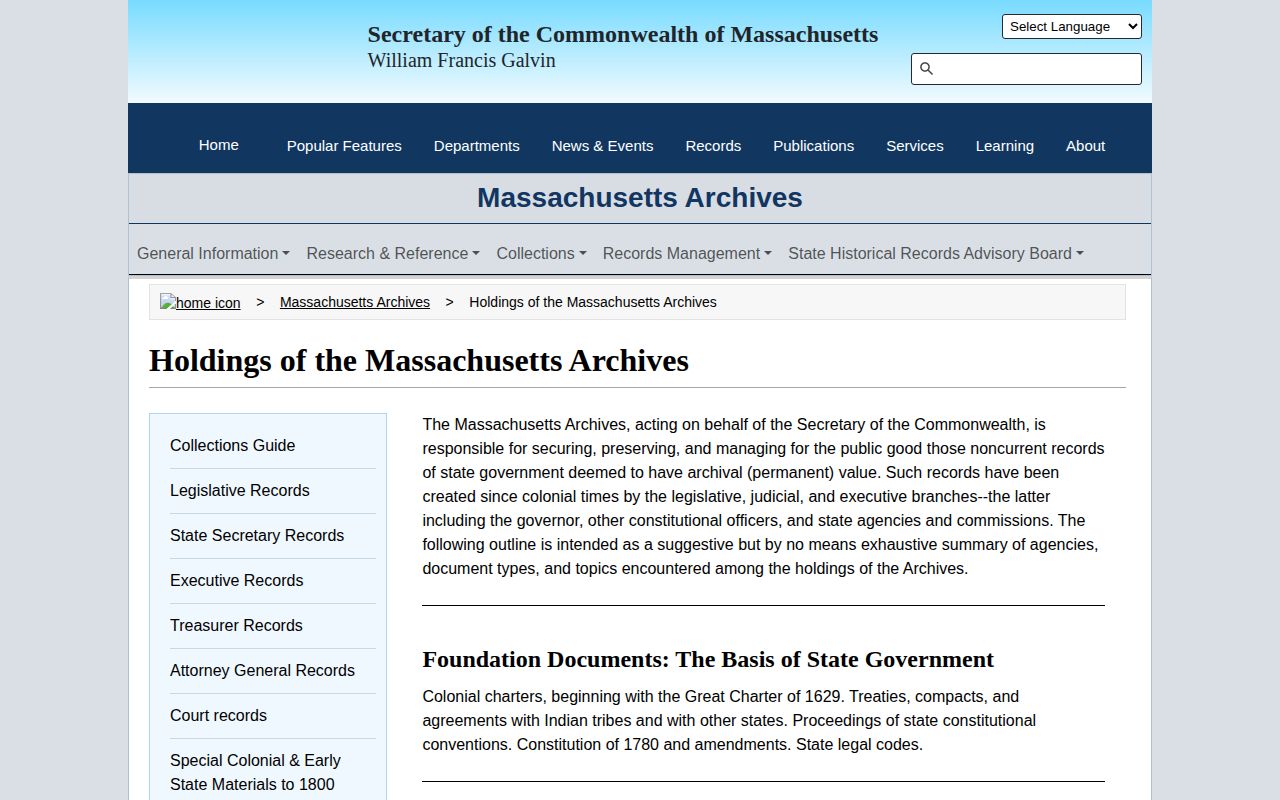
A finding aid describes scope and limits. It is not a promise that a named photograph survives or has been digitized.
Massachusetts Mugshot Retention Rules
A retention schedule sets how long a series is kept. It may also state whether transfer is allowed. The Massachusetts Statewide Records Retention Schedule assigns separate periods to separate series. Its J07 entries cover Department of Correction records. J07-02 sets a 25-year period after final release for inmate booking records. J07-02(a) takes fingerprint cards and photographs further. It requires permanent retention, and transfer to the Massachusetts Archives is allowed. Other entries cover state-prison, house-of-correction, and central-record categories. Each follows its own rule. The central record stopped being created after 2007, so today's path may not match an older one.
| Schedule entry | What it says | What it does not prove |
|---|---|---|
| J07-02 | DOC inmate booking records have a 25-year period after final release. | It does not promise that every file is public, digitized, or searchable by name. |
| J07-02(a) | DOC fingerprint cards and photographs are listed for permanent retention and possible transfer. | Eligibility for transfer does not confirm that a particular photograph transferred. |
| J09, Middlesex Sheriff | Some commitment, discharge, fingerprint, and photo records are permanent or eligible for transfer; other records have shorter periods. | This is a local example, not a statewide rule for every sheriff. |
Retention rules vary by county. The Middlesex Sheriff entries are an example of that variation. They are not a stand-in for another sheriff's schedule. The Archives public-records FAQ makes a key point: schedules set minimums, and minimums are not forever. Retention says how long a record must be kept. It also governs transfer, but says nothing about online display. Access may still be limited by privacy, juvenile, sealing, or other rules.
J07 describes state Department of Correction records. J09 is the Middlesex Sheriff example. Neither works as a blanket rule for every county jail. For a county booking photo, find the custodian first. Ask which schedule covers that series and whether a transfer took place. A transfer option on paper is not proof. It does not show that a particular image ever reached the Archives.
The Archives research-services page explains how the public can request access to collection material.
Access and copies depend on condition, privacy, format, and procedures.
Massachusetts Court Files and Dockets
Court records open a path the Archives and the arresting agency do not. Through MassCourts, you can look up a party, case events, docket entries, and disposition details. What you can view remotely depends on the court department and the case type. Two terms matter here. A docket is the court's running record of filings and events. A disposition is simply the result recorded for the case. Searches may require the department, division, location, date range, or case details rather than a bare name. That matters when spellings or birth dates differ, since one name can match several dockets.
The official public file sits with the clerk, register, or recorder where the case was filed. Under District Court public-access guidance, a criminal file generally becomes public once a complaint issues. Exceptions still apply. Impoundment limits access by court order, and sealing, juvenile protections, victim-name rules, and other carve-outs can keep parts of a file closed. A Suffolk calendar in an Archives finding aid may point toward a historical case, but it is no stand-in for the court file itself. One caution: neither a docket nor a calendar counts as a booking-photo source unless that exact item holds an image.
Note: A remote docket may identify the case while the clerk's file holds the official documents and any access limits that apply to them.
For older arrest tracing, the Trial Court's docket-search instructions walk through how to find public case events.
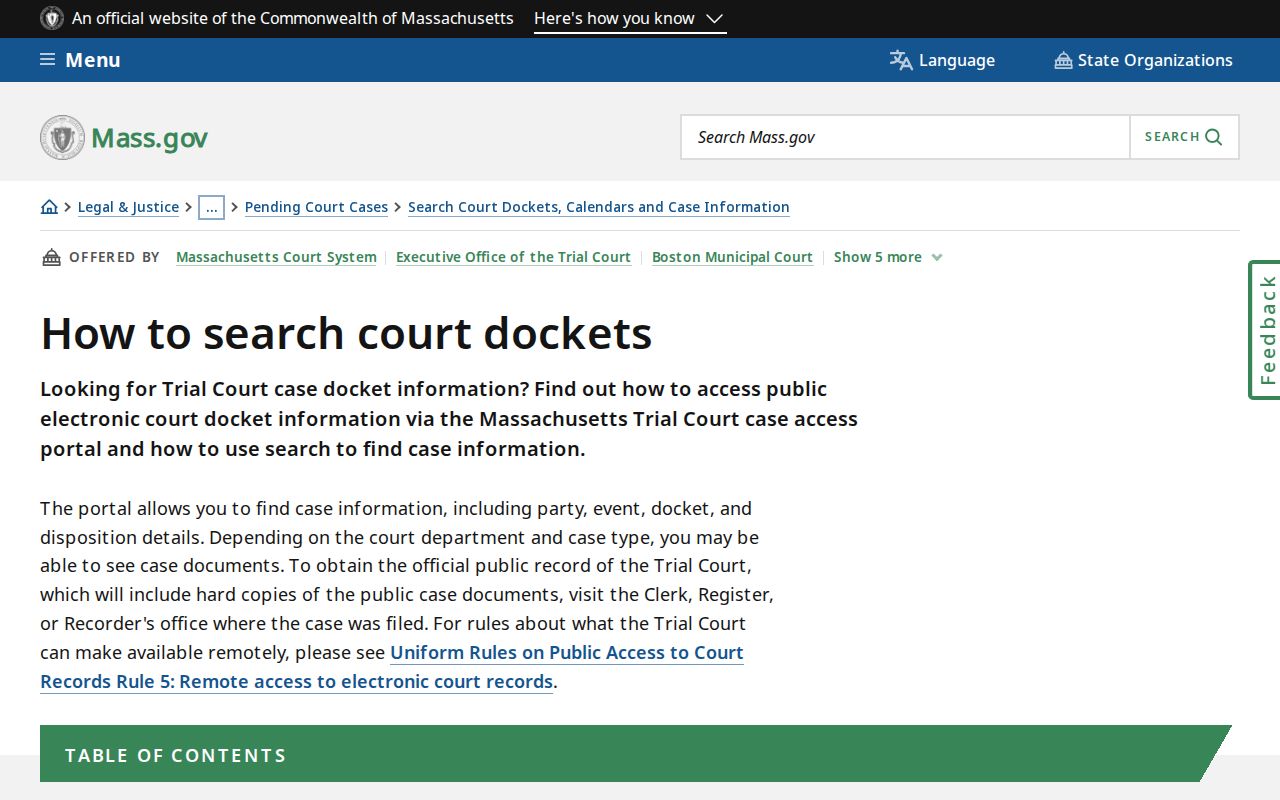
Older cases can sit under different identifiers or in paper files. Some of those records only surface after a request to the clerk.
Requesting Massachusetts Archive Records
Start with a narrow ask. The State Archives handles research in person, by mail, or through email. Its research-services page spells out each route. Written questions go to archives@sec.state.ma.us. Privacy rules and other legal limits still apply to what staff can release. Dig through the collection guides and county finding aids first. That groundwork tells you which record series probably holds the file. Then ask two pointed questions. Does the original agency still keep it? Was the photograph indexed somewhere apart from the case file?
- Write down the person's name and any name spelling used at the time, the approximate year or date range, and the county or institution connected to the case.
- Identify the record sought, such as a jail calendar, commitment record, inmate case file, fingerprint card, or booking photograph. Include a court case number, series code, or facility name if known.
- Check the Archives finding aid, then contact the Archives with the description and ask if the record remains there or with the original custodian. Ask whether a photo is included or indexed separately.
- State the format needed and ask about access limits, copying options, current fees, and expected timing. The research-services page describes five-cent photocopies, microfilm prints, certain personal-USB scans, and high-resolution digital files with a per-file fee and possible turnaround.
Not every old booking photo made it to the Archives. When a record stayed put, try the sheriff. You can also try the police department or the court clerk where the case began. Keep each request tight. One event, plus a workable date range, works best. That beats asking an agency to hunt down every photograph in its vault. Save the custodian's reply and any note explaining a restriction. A request or appeal does not force a release. The Massachusetts public-records statute governs how an agency must respond. That duty kicks in once it holds the record you named.
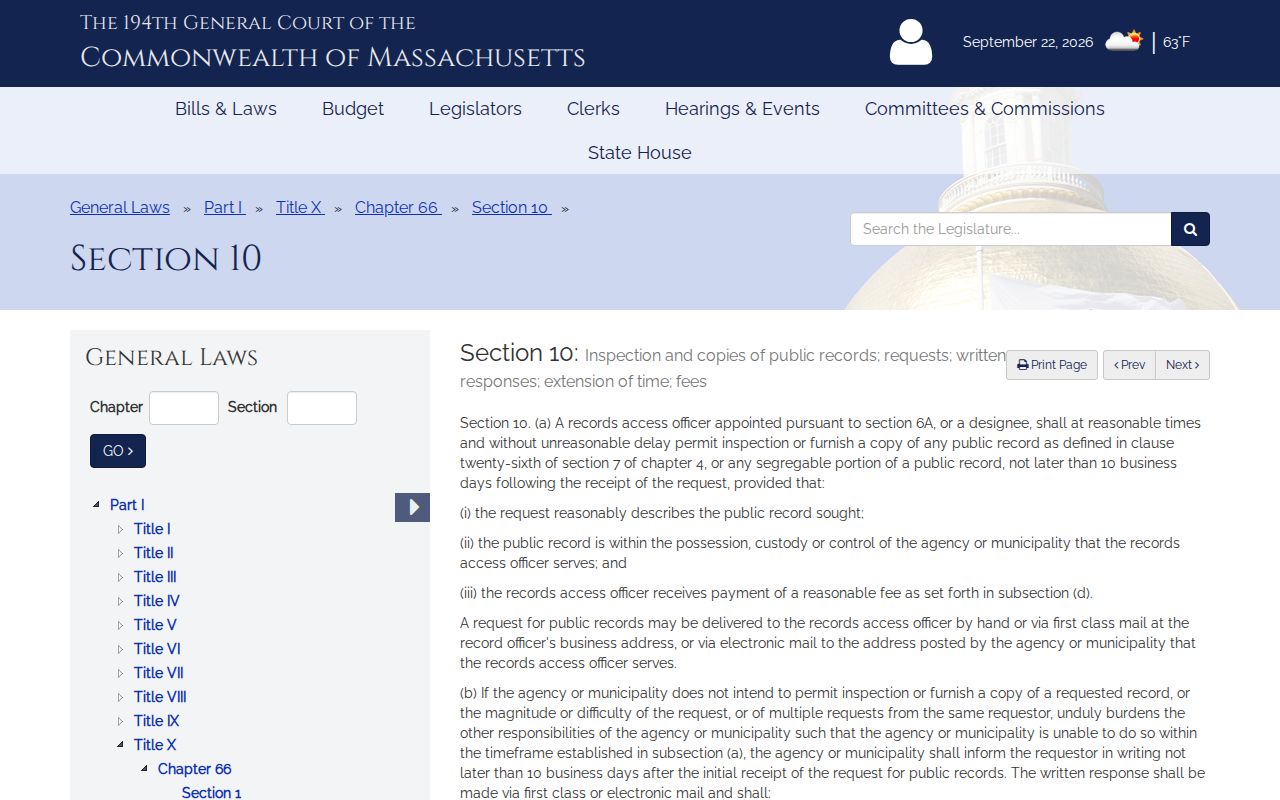
Whether a given old photo survived, moved, or stays open to the public is nothing the statute itself decides.
When a Massachusetts Record Leaves the Web
Arrest pages vanish for all sorts of reasons. A vendor purges old entries. An agency shuts down a web portal. Someone gets released, a photo gets corrected, or a whole system migrates to new software. Sometimes no photograph was ever posted at all. A third-party copy can linger online long after its source disappears. That copy is not fresher or truer for surviving. Its age is simply harder to see. What you do next depends on who holds the record. Was it transferred, corrected, or removed under a retention schedule? The custodian's own rules answer that question.
Treat the word "current" with care, because it only means current as of the date the source itself displays. The statewide Massachusetts records overview shows where recent county rosters and police logs fit into the source chain, and it says nothing about custody, pending charges, or a wanted notice still being active.
Retention is not a promise of a public photo. A schedule may have destroyed the record years ago. Files get transferred without being digitized, or kept under an access restriction. Some case files never held a portrait at all, so confirm the custodian, the series, and the access status before calling an image available.
Old pages often show an arrest with no outcome. That gap is common. The fix is the court docket, or a request to the clerk for the official file. Keep each piece distinct: the arrest record, any later disposition, and any archived photograph, each with its own date and source label.